a series of three prints that converts selected works from the tate collection into machine-readable binary grids. each work is reduced to a 240×240 field of 1s and 0s and printed at a monumental scale, retaining only the procedural record of transformation rather than any legible image. the result is a sterile surface that mimics institutional display while withholding recognition. the series stages cultural flattening as a material process: complex historical artworks become abstract data, detached from context and rendered useful primarily to systems that can read and extract from them. the works operate as both image and refusal—an output that resembles compliance while resisting interpretation. produced during a tate × anthropic residency, not_data treats institutional and corporate expectations as part of the medium, reflecting on how cultural value and artistic labor are routinely converted into demonstration, promotion, and training material.
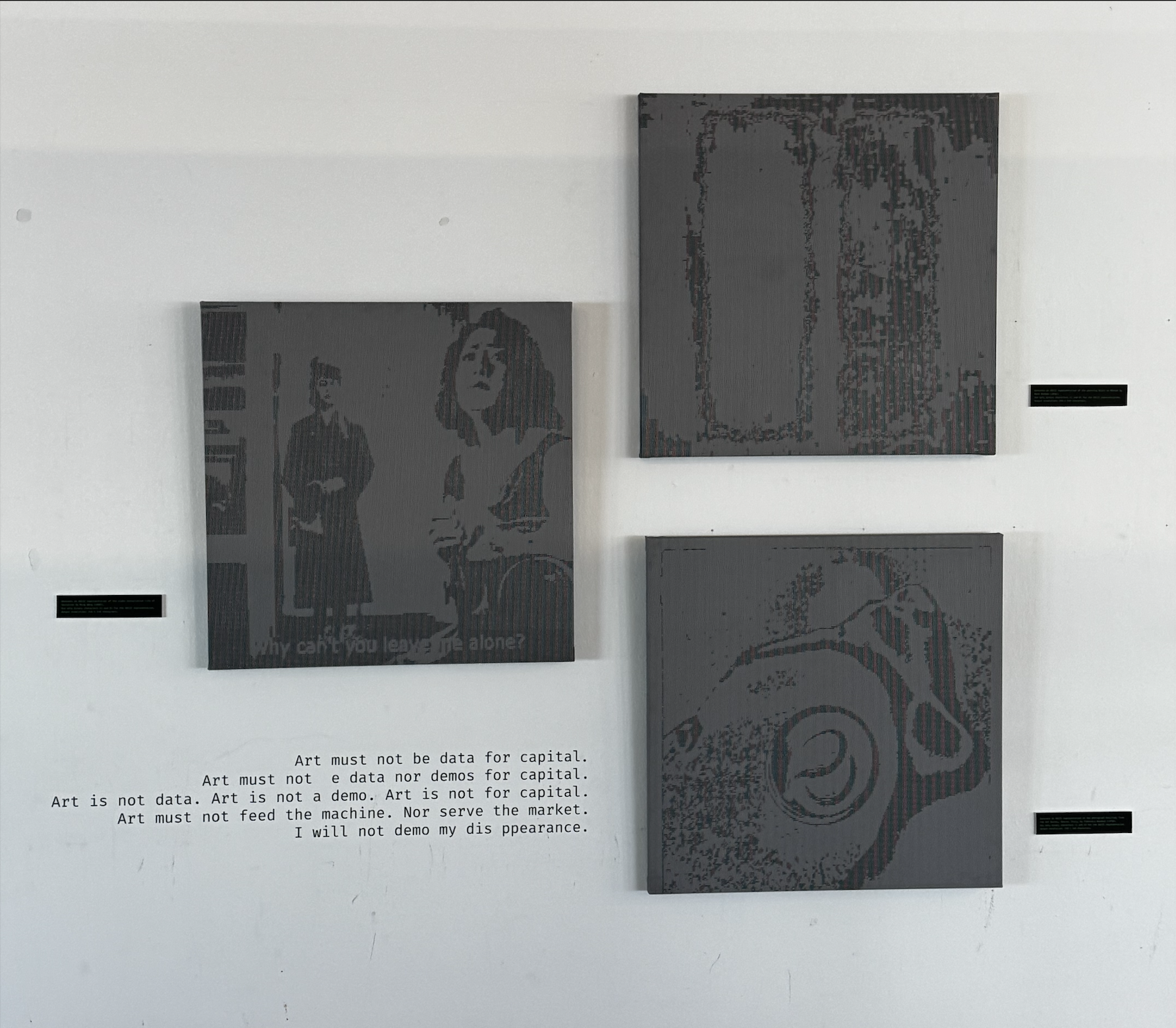
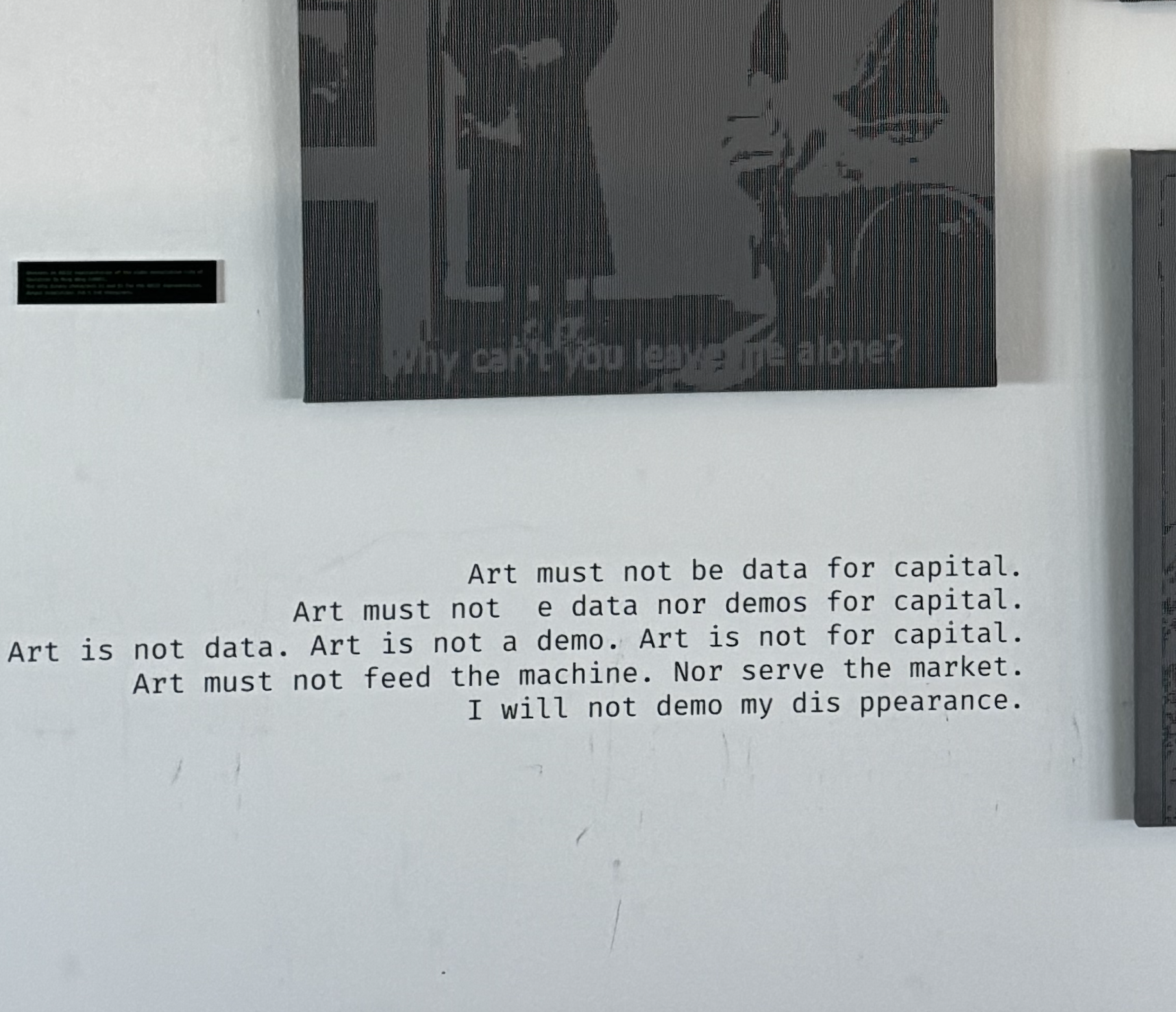
the work engages the logic of extraction that underpins contemporary ai culture: public artworks are increasingly treated as raw material for private systems, while meaning is displaced by processing. by translating canonical works into binary—without attempting to “recreate” them—the series foregrounds what disappears when culture is treated as input: historical specificity, embodied labor, and political context. the format also mirrors institutional pressure to produce legible outputs for sponsors and platforms, turning procedural compliance into a mode of critique. the works are titled i / ii / iii to emphasize sequence and protocol over authorship, presenting the series as a record of transformation rather than an interpretive remake.
the series was produced using a custom python workflow that converts source images into a 240×240 binary grid and exports the result for print. each canvas presents the binary output as the final surface. no generative ai systems were used to create the images. the process is intentionally procedural and repeatable, treating translation into machine-readable form as the work’s primary action. three works were generated, each referencing a different artwork from the tate collection, maintaining the same resolution and transformation protocol across the series.